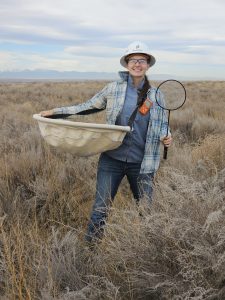
From Seed to Site: A Day in the Field with Shantanna

Restoring native plant communities begins long before plants go into the ground. It starts in the field with careful planning, knowledge of native species, and the collection of locally adapted seed.
As part of EcoPoint’s Native Live Plant Program, Shantanna spends her field days across Weld County, Colorado, collecting native forb and shrub seed that will eventually be grown in our greenhouses and returned to the same general area. We caught up with Shantanna to learn what a typical collection day looks like, the challenges that come with fieldwork, and what happens to the seed after it leaves her hands.
Preparing for a Day of Seed Collection
A successful collection day starts with preparation. “To start off the day for a successful seed collection, I ensure that I have all the equipment that I will need in the field,” Shantanna explains.
Her field kit includes a hopper, seed bags, multi-tool, pest strips, scissors, tweezers, voucher press, racket, and Sharpie. With equipment ready, she reviews EcoPoint’s mapped forb populations and develops a plan for the day, identifying locations and target species of native forbs and shrubs. From there, she works her way from one collection site to the next. But finding a target species doesn’t automatically mean seed will be collected. Shantanna evaluates each population before making a collection.
“I decide what to collect based on the desirable species that we have listed from our client,” she says. “If the plant looks healthy, the population is dense enough, and the seeds are ripe, then a collection will be made.” These decisions help ensure that collections meet project needs while providing quality seed for the next stage of the Native Live Plant Program.
Collecting sand sage in Weld County
On one recent field day, Shantanna worked among populations of sand sage in Weld County.
Moving from shrub to shrub, she selected healthy plants for collection. She placed a hopper—a large collection bag—beneath each shrub and used a racket to gently help the mature seed fall into the bag. The process continued throughout the day, with Shantanna traveling between collection areas and gathering seed until the sun began to set. Field collection can mean long days, but it provides the locally sourced plant material needed for the work that follows.
Working Through the Unexpected
Fieldwork rarely goes exactly according to plan. Conditions can change quickly, and collectors need to be prepared to adapt.
“Challenges I face in the field include flat tires, unexpected weather patterns, snakes, insect swarms, territorial landowners and animals,” Shantanna says. While the challenges vary from day to day, preparation remains key. “Most of the time, these issues can be overcome by consistent safety precautions and communication.” That combination of planning, awareness, and communication allows field crews to navigate unexpected situations while keeping safety at the forefront.
What Happens After the Seeds Are Collected?
Filling the seed bags is only the beginning of the journey. Once Shantanna’s collections are complete, the bags are brought back to EcoPoint’s office in Windsor, Colorado. From there, they are shipped to EcoPoint’s greenhouses in Utah, where the seed is cleaned and each batch undergoes viability testing. The highest-quality viable seed is then planted and grown under greenhouse conditions. The goal is to complete the cycle where it began: back in the landscape. By the following spring, plants grown from the locally collected seed can be ready to return to the same general area where their seed was gathered.
Local Seed, Local Plants, Lasting Impact
The journey from a Sand Sage shrub in Weld County to a greenhouse—and eventually back to the landscape—shows how many steps go into producing native live plant material. It also highlights the people behind that process. Field collectors like Shantanna combine botanical knowledge, careful observation, adaptability, and plenty of time outdoors to help move locally sourced native plant material from seed collection to propagation and, ultimately, planting. Each bag of seed collected in the field represents the beginning of another generation of native plants and another step in supporting resilient native plant communities.